16 June 2025

What does data have to do with identity? Surely – the science of statistics, ones and zeros of tech systems or numerical information in tables or graphs are far removed from issues of gender, sex and sexuality?
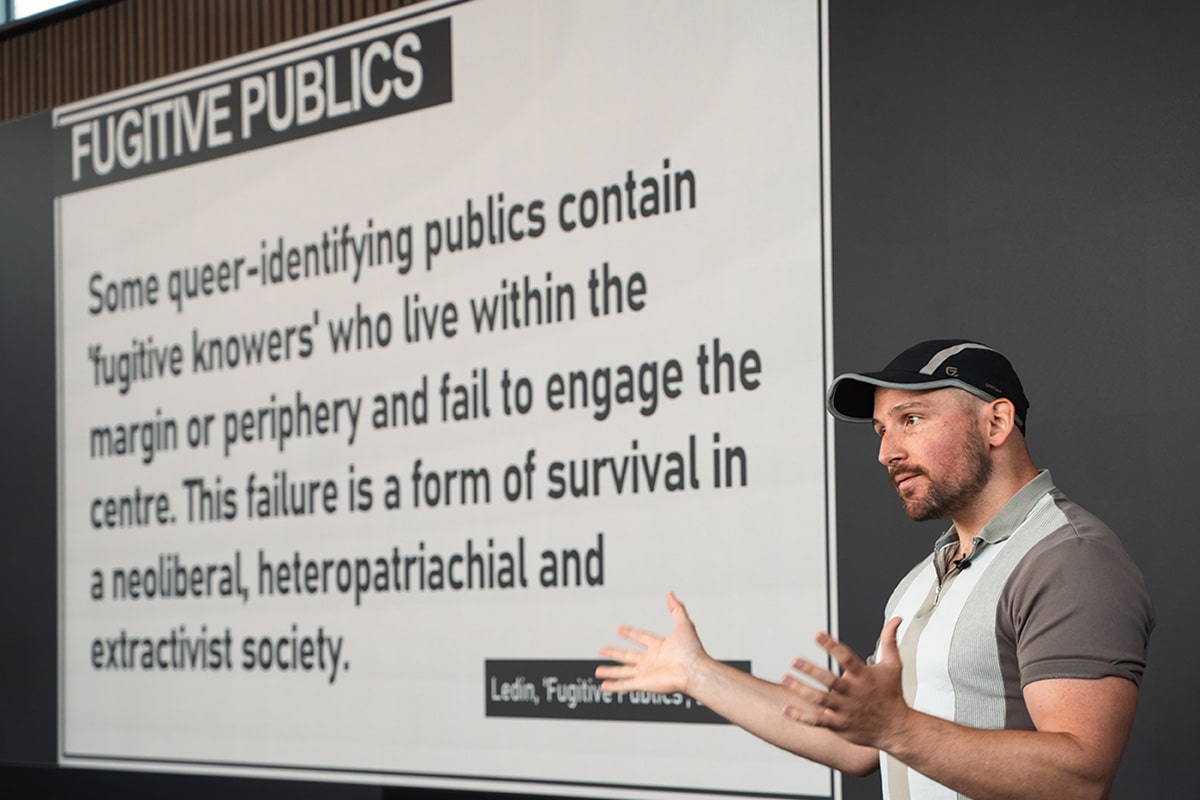
It’s not just about numbers but people too. Contributors to the Queer Data Summit (which took place at on 12 June at the Edinburgh Futures Institute) highlighted how the collection, analysis and use of data is all about questions of politics, history and power.
In Scotland, the issue is urgent as major institutions – including the Scottish Government’s Chief Statistician and Police Scotland – are reviewing their approach to gender, sex and sexuality data. Other institutions, including NHS Scotland and public funding bodies, will soon likely follow.
In April 2025, the Supreme Court ruled that ‘sex’ in the 2010 Equality Act exclusively relates to ‘biological sex’ or a person’s sex at birth – forcing many organisations, which are required to record data for equalities monitoring, to rethink their approach to data. Over the past decade, anti-trans campaigners have also gained momentum, pushing to erase trans people from law, policy and data – most notably, a failed 2022 legal challenge against National Records of Scotland demanding a change in how trans people are counted in the national census.
Against this backdrop, the Queer Data Summit brought together 40 leading policymakers, researchers, community leaders and industry practitioners – from diverse sectoral backgrounds – all working with gender, sex and sexuality data.

The purpose for the Summit was not to instruct attendees how to collect this data – as approaches will differ according to sector and industry, depending on the topic being investigated. Instead, we hoped to share common challenges, reflect on data experiences, and build dialogue and solidarity with people working across different roles and sectors.
There’s a lot more to gender, sex and sexuality data than the question ‘Who counts as a woman?’ We wanted attendees to ask: What does numerical data not tell us when exploring the nuance of people’s lives? What do you do with people who do not fit the boxes made available? Should we move away from always trying to ‘plug data gaps’ and locate ‘missing data’?
In 2022, Scotland’s census reported that 4.0% of the population aged 16 and over identified as LGB+ and 0.4% identified as trans or as having a trans history. While the publication of these percentages was trailblazing – Scotland is one of very few countries in the world to ask about sexual orientation and trans/gender identity in the national census – they do not mean that data practices fully capture the diversity of people’s experiences. Furthermore, collecting data about a community is only the first step – insights from this data then needs to inform action that impacts people’s material, everyday lives.
We hope that the Summit sparks ongoing connections among attendees – whether working in government, tech, health or higher education – and encourages people to think beyond the checkbox when working with gender, sex and sexuality data.
Originally published in The Herald on 11 June 2025.

Dr Kevin Guyan is the Director of the University of Edinburgh’s Gender + Sexuality Data Lab and author of Rainbow Trap: Queer Lives, Classifications and the Dangers of Inclusion (Bloomsbury Academic, 2025).

Dr Chase Ledin is a Lecturer in Social Science and Medicine at the University of Edinburgh Medical School.